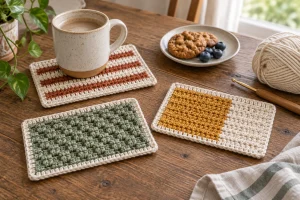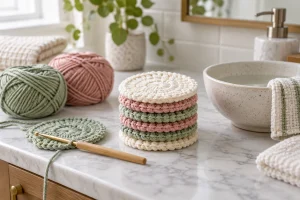

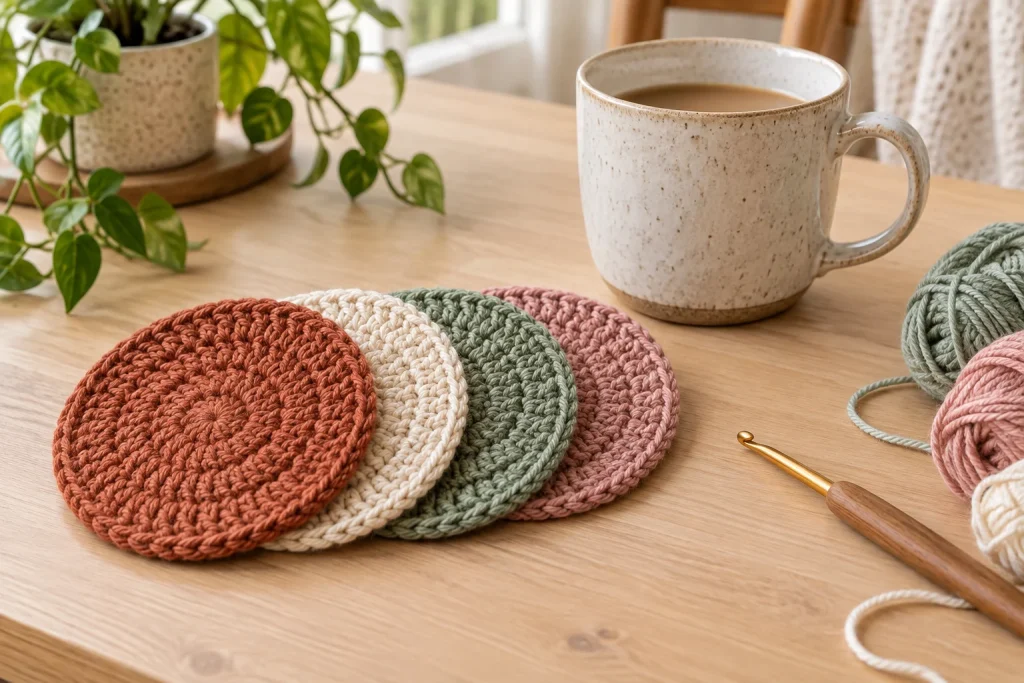
Crochet coasters are genuinely useful one-hour projects when the fiber, size, and finishing suit real drinks. This guide explains how to choose a shape, test absorbency, prevent curling, and make a set that sits flat on the table.
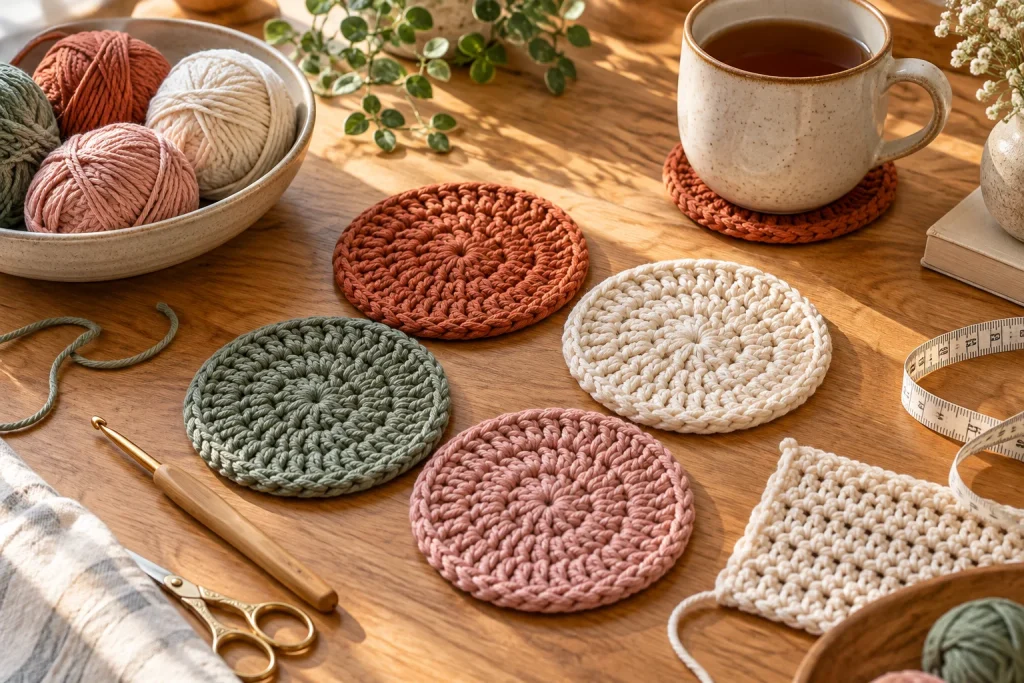
Level: beginner
Time: 35–60 minutes each
Finished width: 10–12 cm / 4–4¾ in
Best fiber: absorbent cotton or cotton-linen
Choose a shape that matches your skill and time.
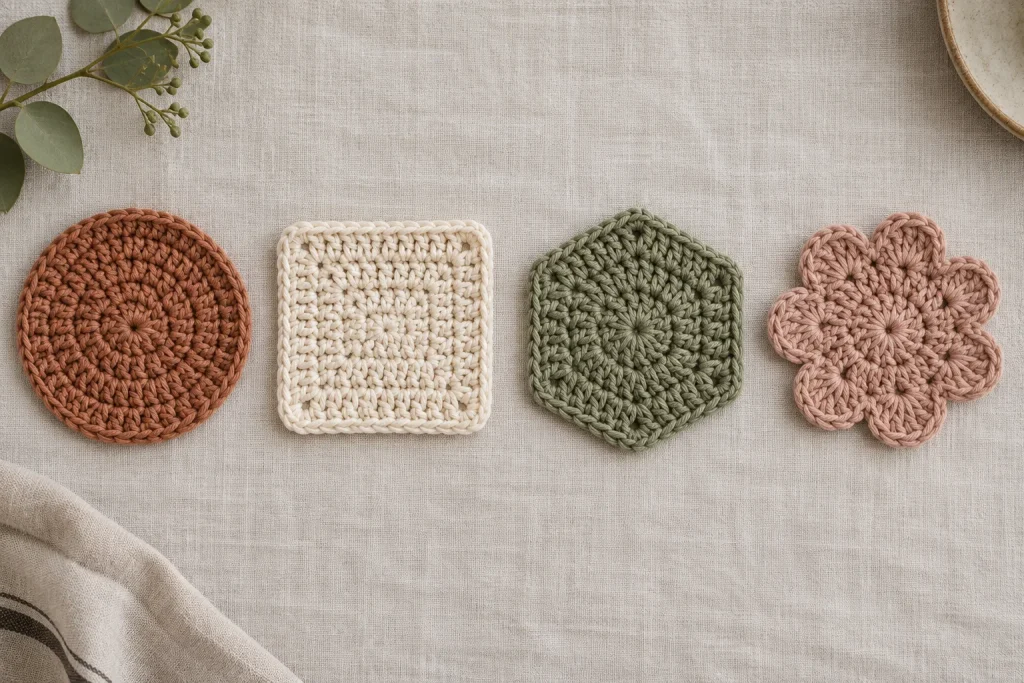
A round coaster teaches you how to increase in the round. A square can be worked in rows or from the center and is easy to size. Hexagons create a modern set but reveal uneven corner spacing. Floral coasters make attractive gifts, although deep scallops reduce the stable area beneath a glass. For your first set, choose one outline and repeat it four times.
Use yarn that handles moisture and heat.
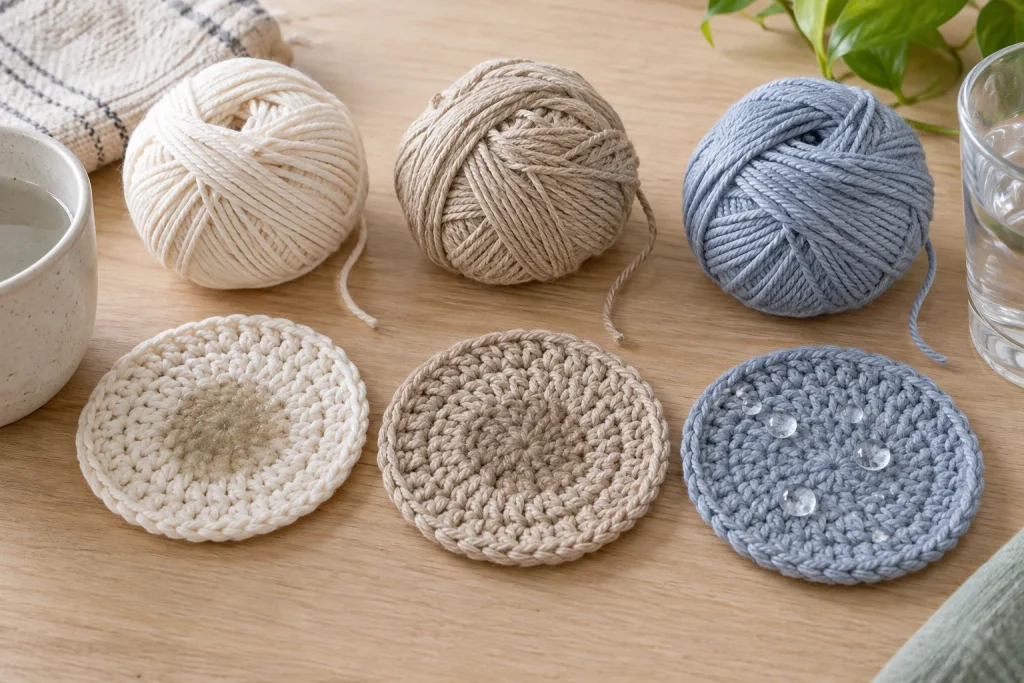
Kitchen cotton is affordable, washable, and absorbent. Cotton-linen dries quickly and produces a slightly firmer fabric. Acrylic can work for decorative coasters but is less absorbent and should not be placed beneath extremely hot cookware. Avoid fuzzy yarn: loose fibers hold stains and can make a mug less stable.
Make a small swatch, wet it, and let it dry. Check whether the yarn changes size, stiffens, or releases dye before committing to a full matching set.
Measure for the cups you actually use
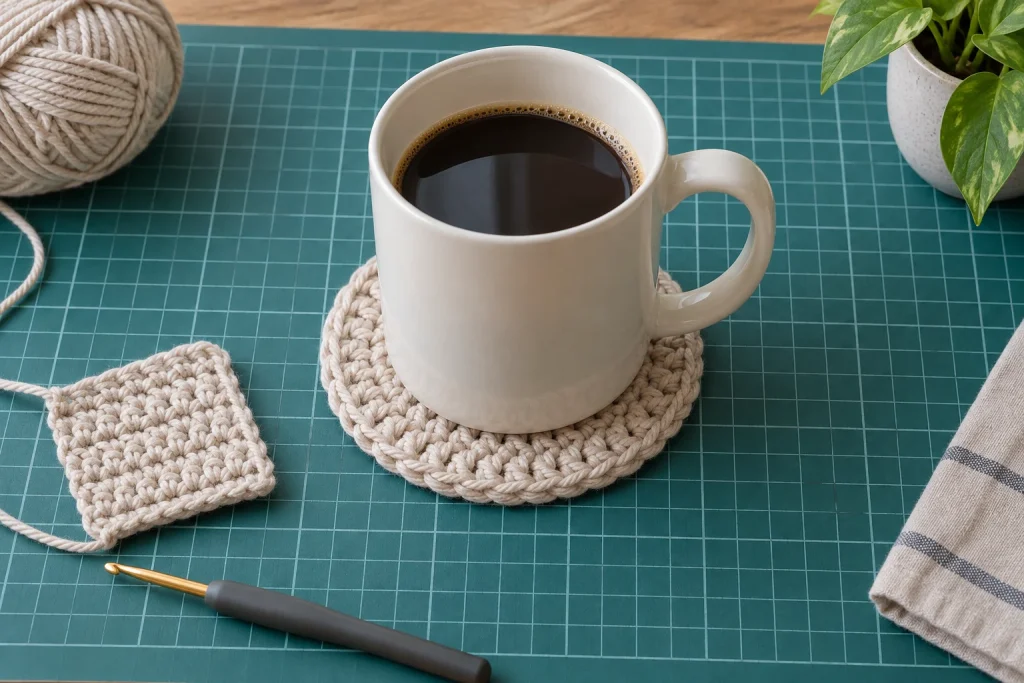
Measure the widest mug or glass base in your home and add 2–3 cm of clearance. Most everyday coasters finish around 10–12 cm. If working from the center, stop one round early and test the mug rather than automatically following a fixed round count. A coaster that is too large takes longer to dry; one that is too small cannot catch condensation.
Prevent waves and cupping while crocheting.
Wavy edges usually mean too many increases; a cupped center means too few. Place markers at increased points and lay the work flat after every round. If a circle begins to ripple, remove part of the latest round rather than hoping blocking will correct heavy excess fabric. Maintain relaxed, consistent tension around corners.
Block the set for consistent dimensions.
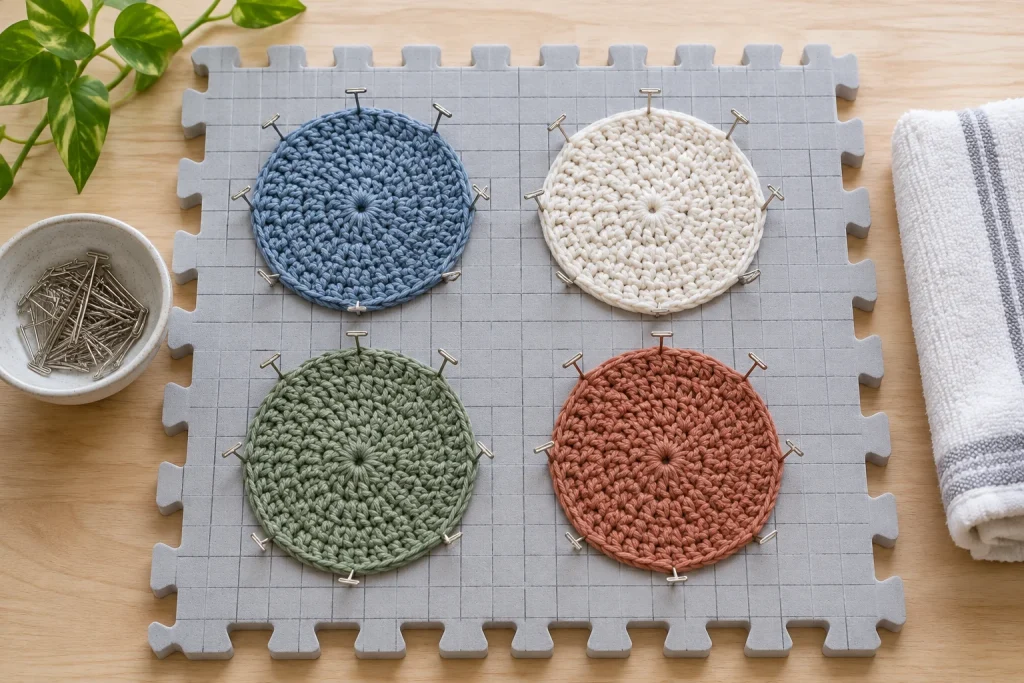
Wet or damp-block according to the yarn label. Smooth each coaster on a blocking mat and use rustproof pins around the edge without stretching individual stitches into points. Measure one finished sample, then block the remaining coasters to match. Let them dry completely before stacking.
Test the coasters in real use
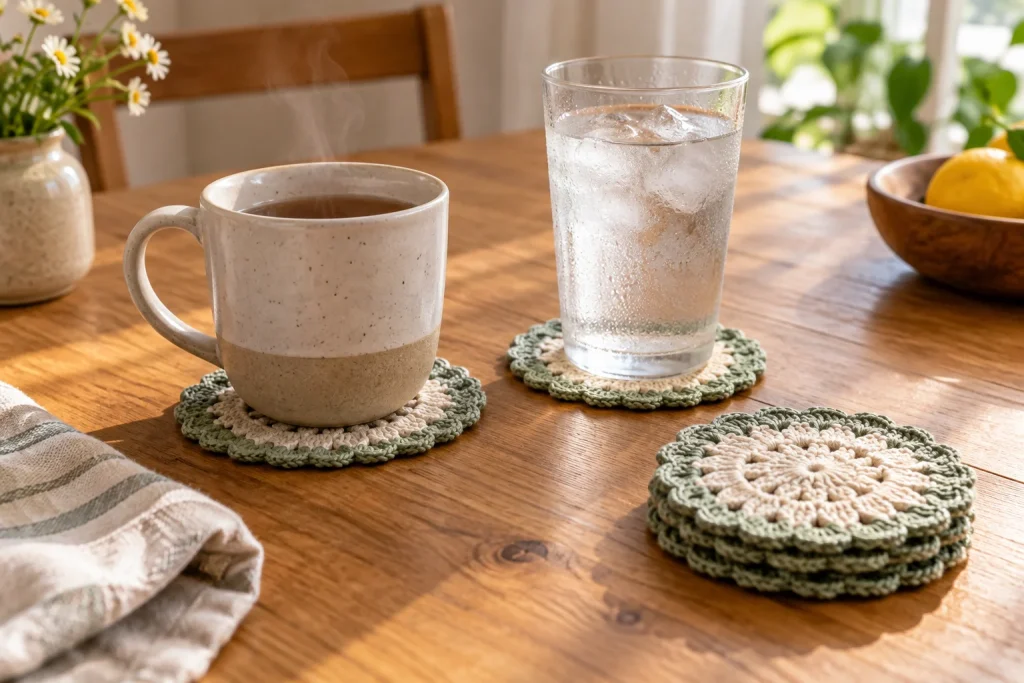
Place one coaster beneath a cold glass for twenty minutes, then check whether moisture reaches the table. Test another under a normal hot mug and confirm it remains flat. Wash the sample once before gifting or selling, record the care method and retest its dimensions after drying.
Continue with practical small projects
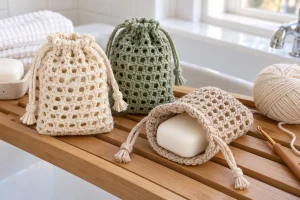
Make a matching beginner mug rug, add a fitted cup cozy, or use leftover cotton for reusable face scrubbies.