
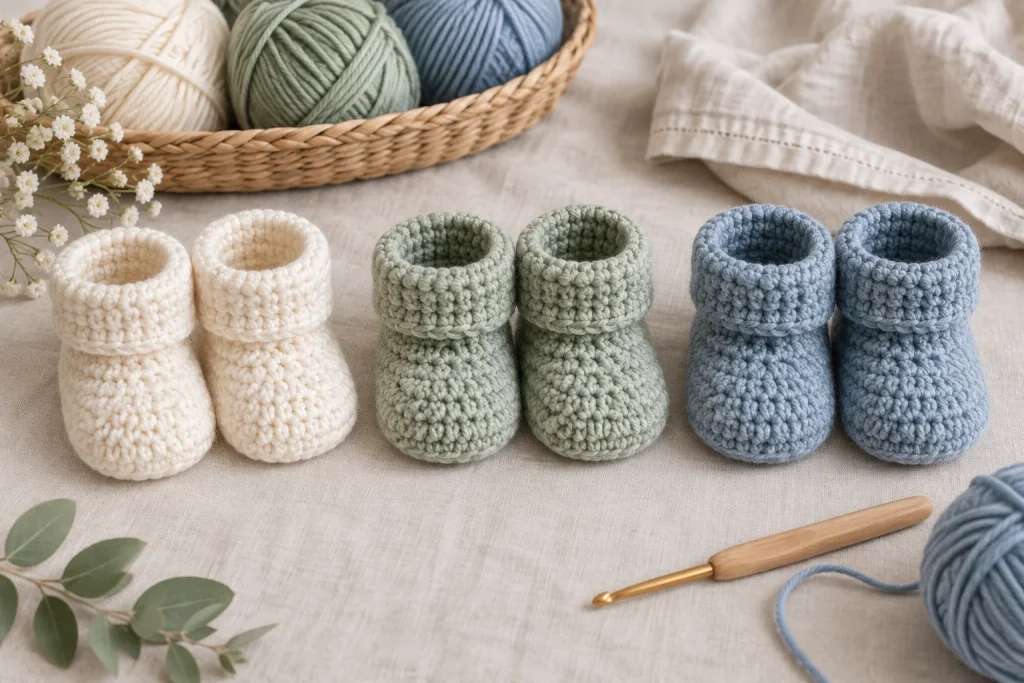
Baby booties must fit without compressing toes, slipping off easily, or relying on loose ties and small decorations. This beginner guide uses foot measurements, paired construction, and washable finishing for a practical handmade gift.
Level: confident beginner
Time: 2–4 hours per pair
Best practice: measure the intended wearer when possible
Use: warmth and supervised wear, not footwear for walking
Size from foot length and circumference
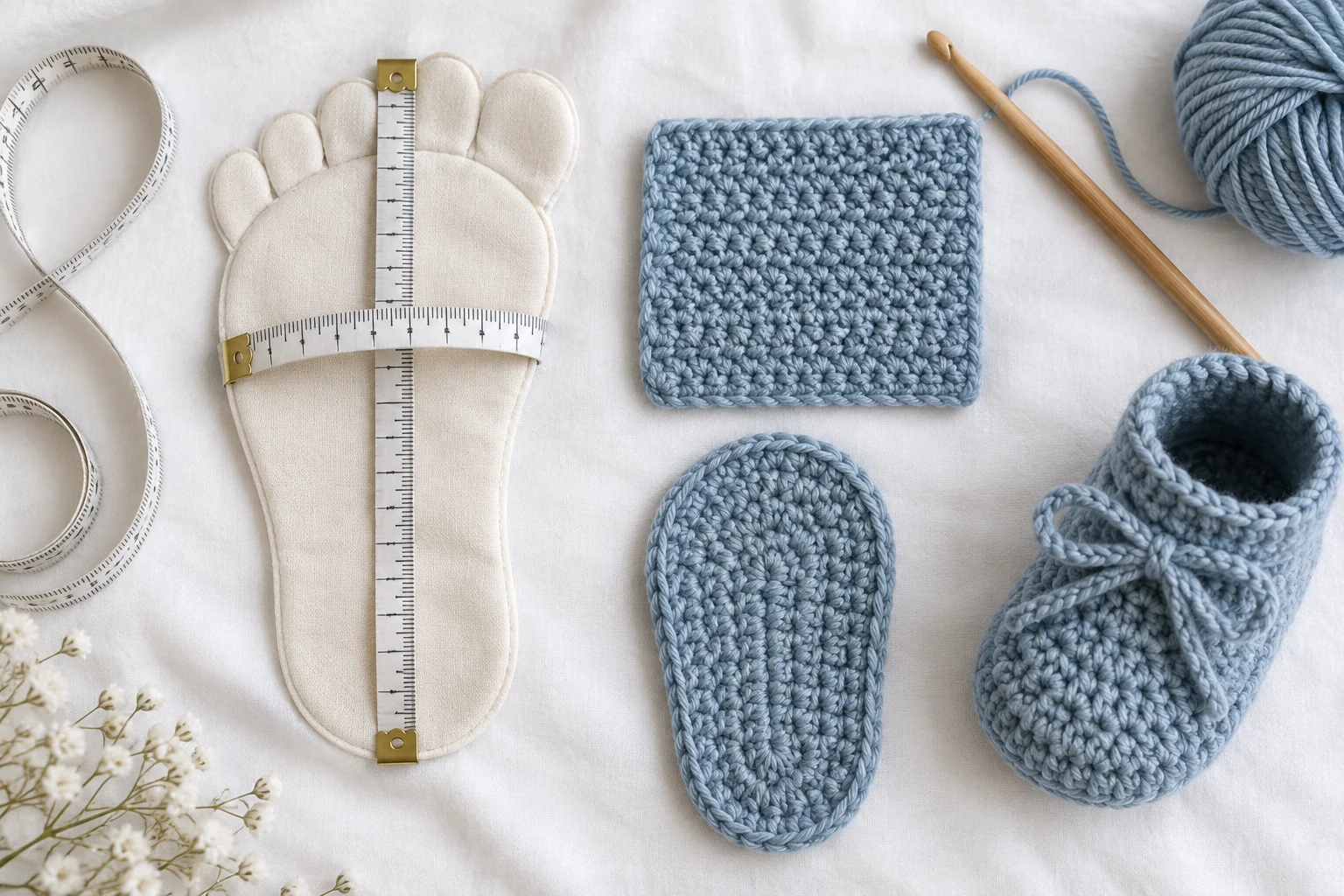
Age labels are approximate. Measure the heel to the longest toe and around the widest part of the foot, then add modest growth ease according to the pattern and yarn stretch. The finished sole should be longer than the foot but not so large that the bootie twists. Recheck the gauge after washing the swatch.
Choose soft, washable yarn and dense stitches.
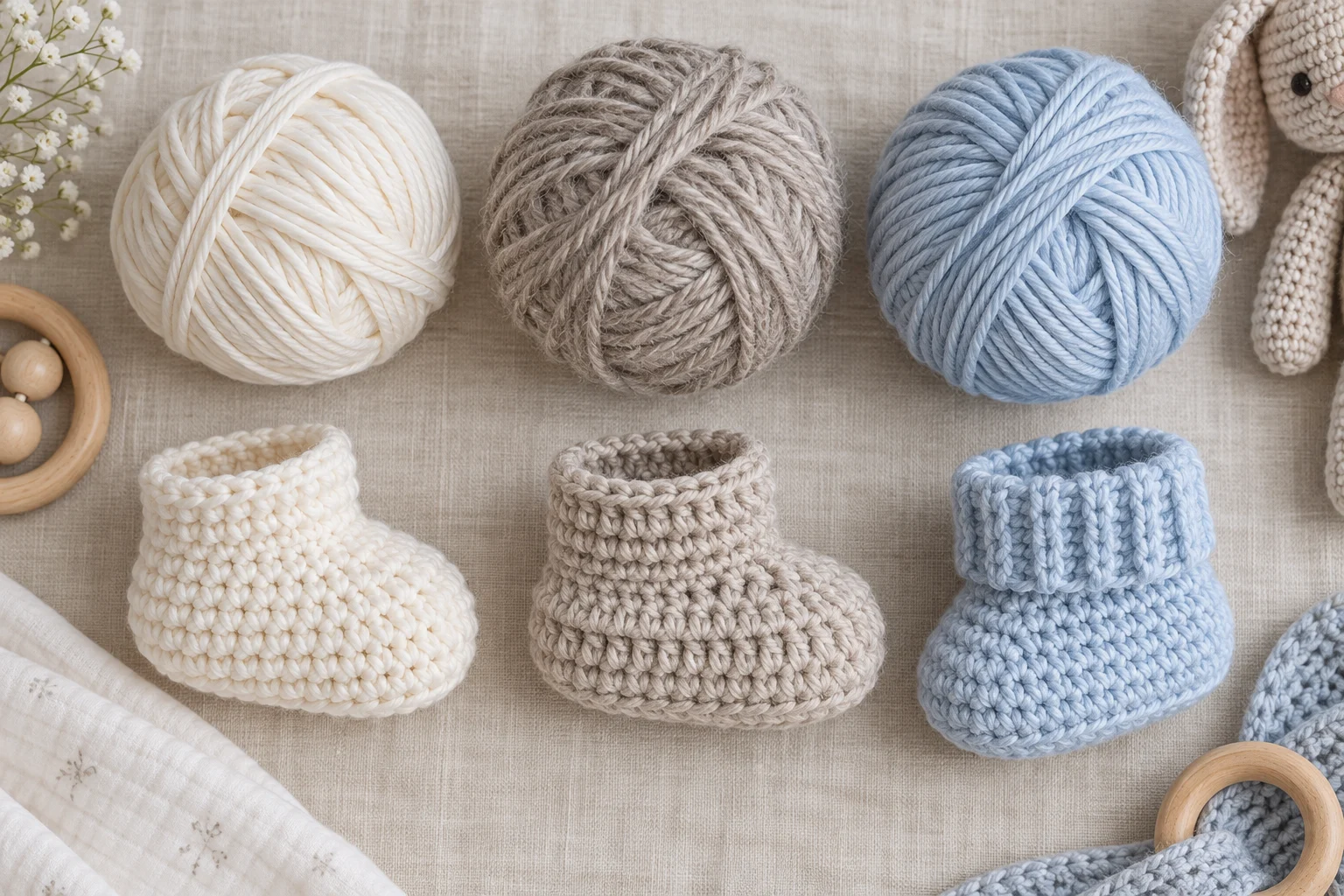
Use smooth yarn intended for sensitive wear and follow its care label. Cotton blends provide definition, washable wool blends add warmth, and soft acrylic can be easy-care. Reject yarn that sheds, feels scratchy or becomes stiff after washing. Keep the sole dense so toes cannot catch through large gaps.
Work the pair side by side.
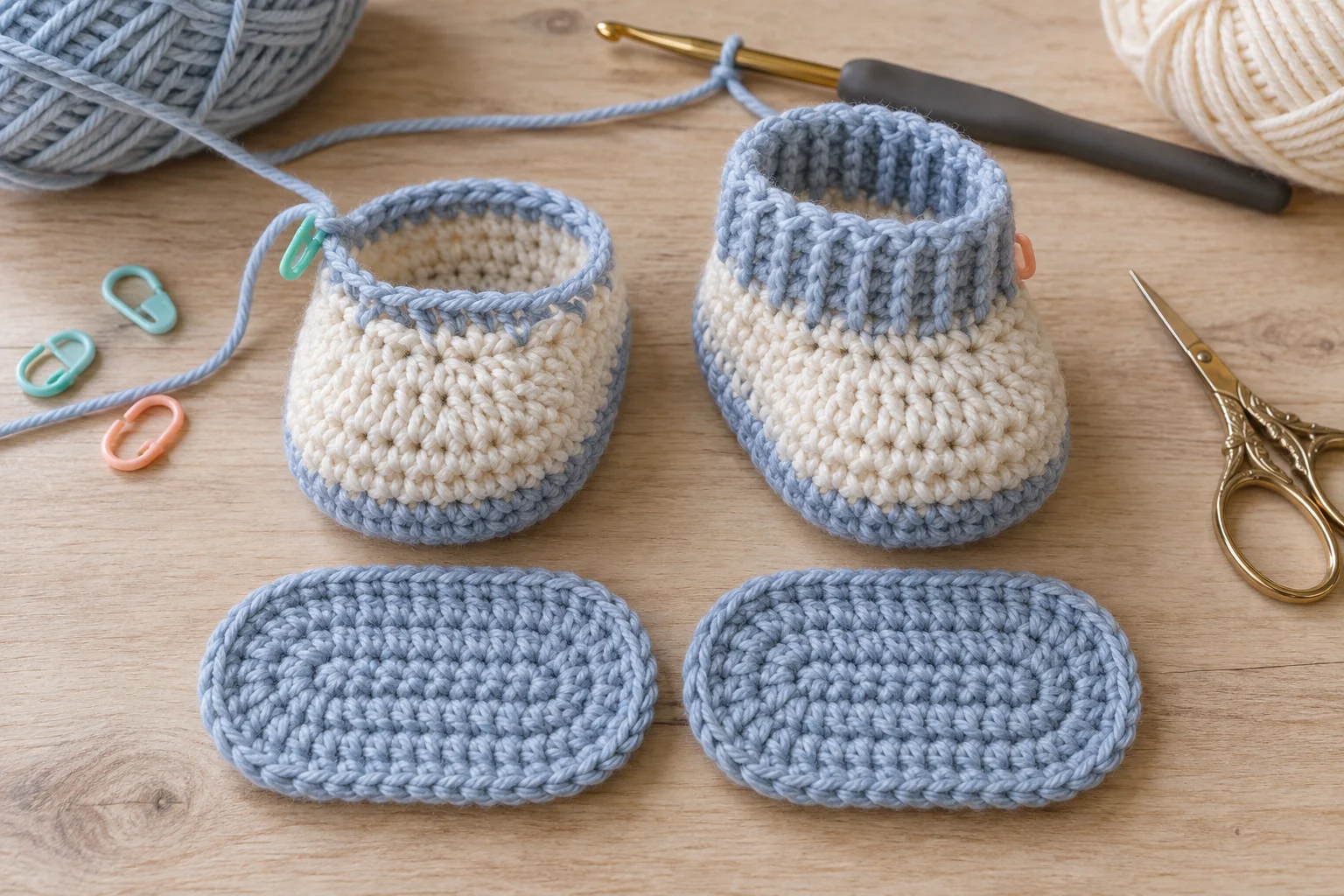
- Crochet both oval soles and compare length and stitch count.
- Complete the first sidewall round on each bootie.
- Shape both toes with identical decrease placement.
- Build both ankles to the same row count.
- Add matching ribbed cuffs and weave tails through several dense stitches.
Use separate yarn balls or divide the yarn by weight to avoid an unexpected shortage that delays the second bootie.
Check the fit without restricting movement.
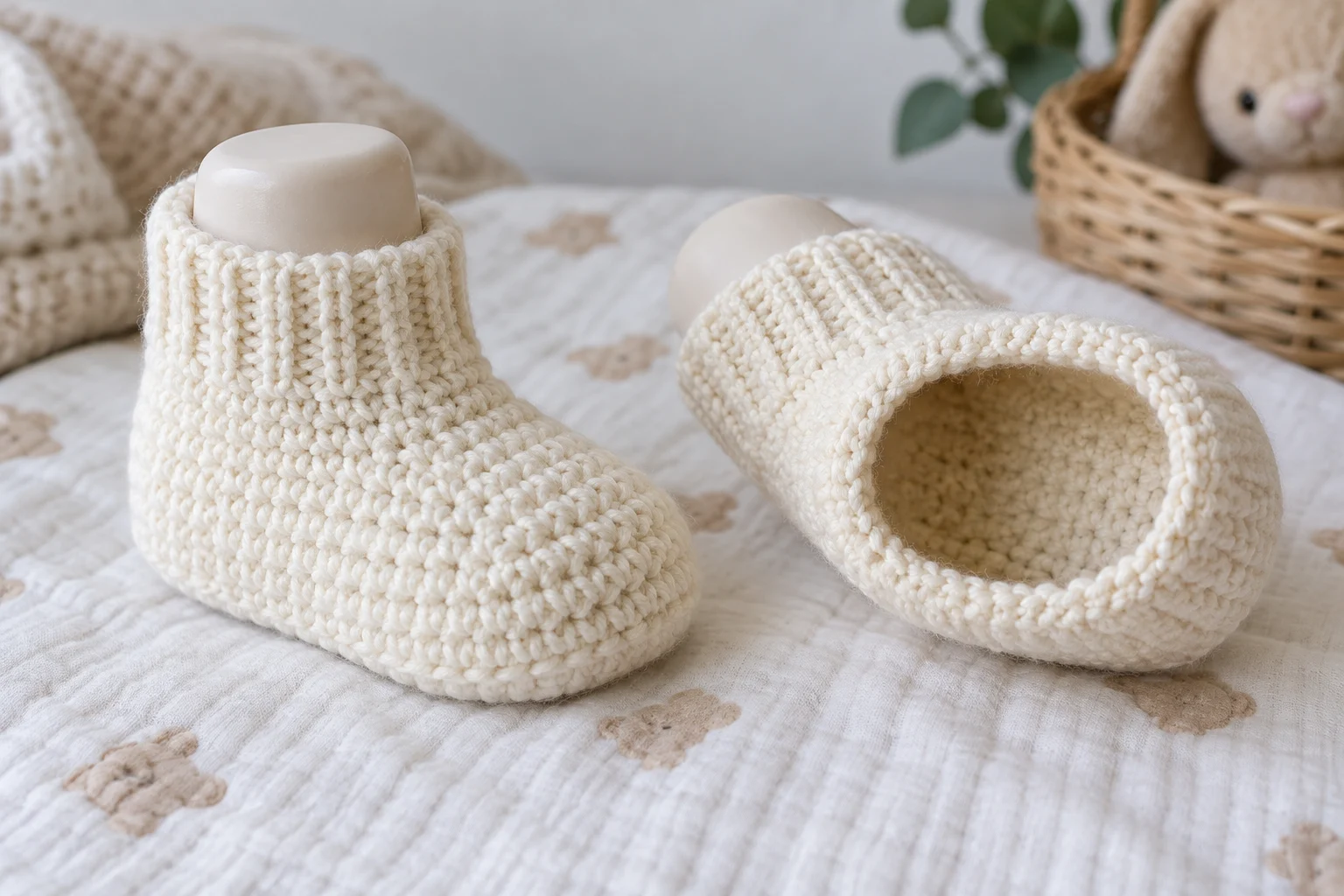
The toes should move freely, and the cuff should not leave a deep mark. Check inside for knots, stiff seams, and loose tails. Booties that repeatedly slip off need a better-fitting cuff or smaller size, not a long drawstring. Remove booties for sleep and follow caregiver and healthcare guidance.
Use baby-aware finishing.
Avoid buttons, beads, bells, pom-poms, long ties, and glued appliqués. If adding an embroidered motif, use short, secure stitches and bury tails deeply. Pull-test all seams. These booties are soft accessories, not protective shoes, and not suitable for walking surfaces.
Prewash and include care directions.
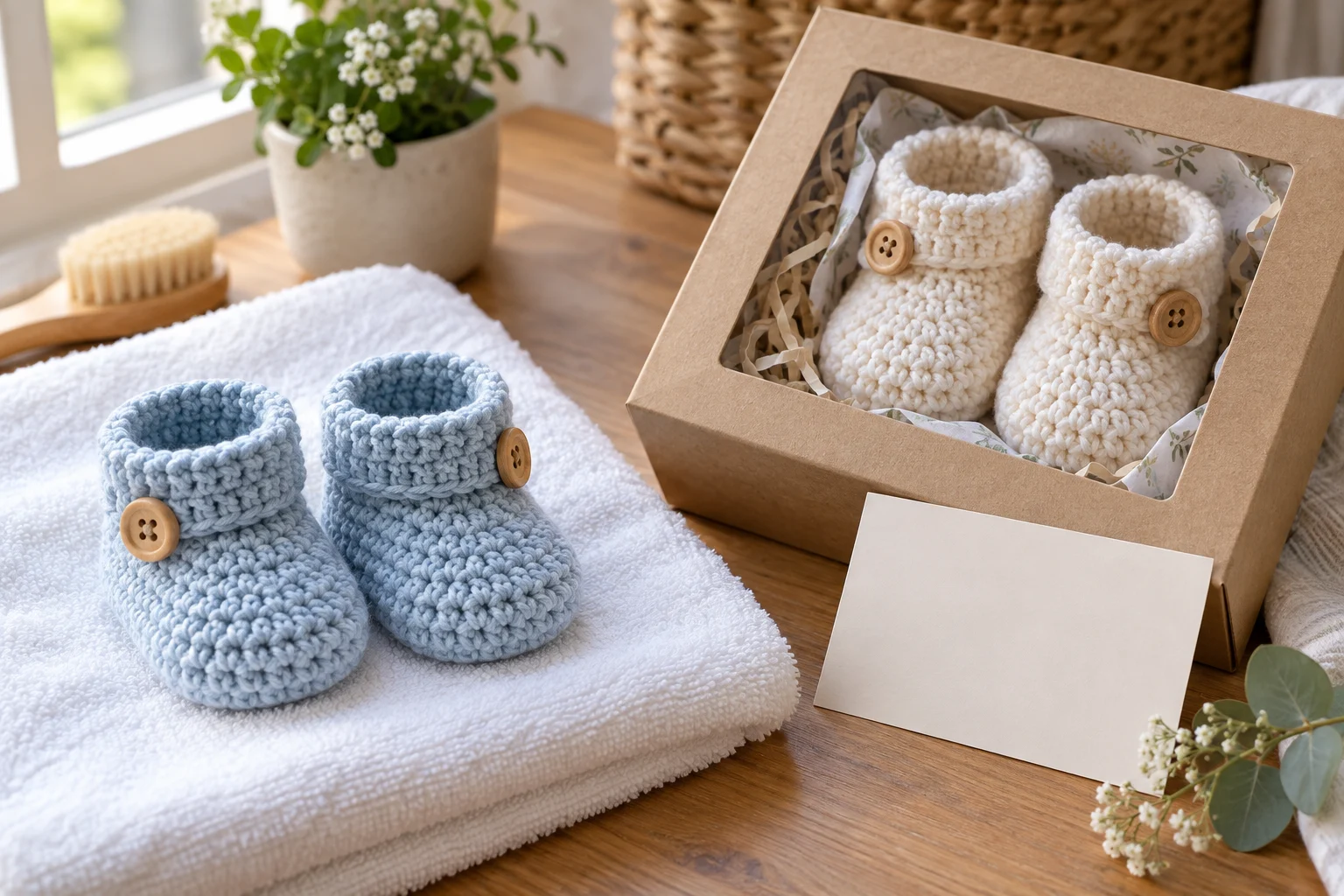
Wash with an appropriate gentle product, reshape, and dry completely. Re-measure both booties and compare them before gifting. Include fiber content, size measurements, and washing instructions on a separate card.
Build a coordinated set
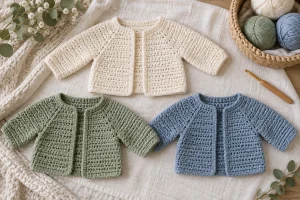
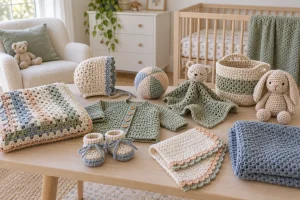
Use the same yarn for a newborn hat, a carefully sized baby cardigan, or a complete gender-neutral baby gift set.